
Free, Fun Resource for Schools: Language Class Game Time
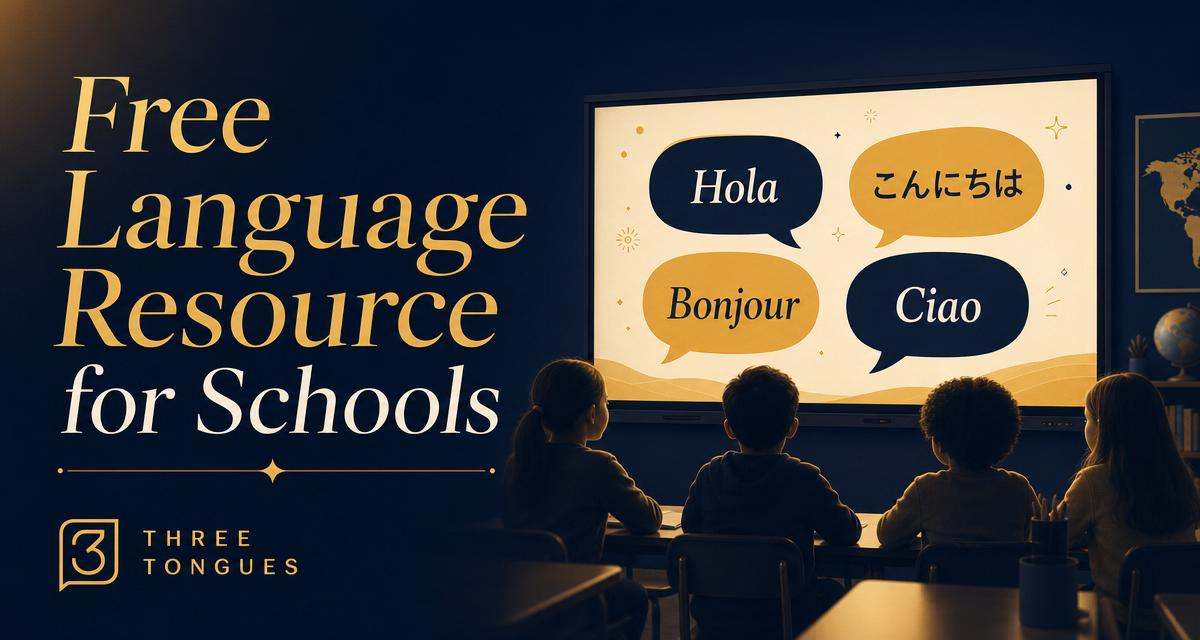
Three Tongues is a free language resource for schools that turns language recognition into a quick, accessible classroom game. Teachers simply share the link, pupils listen to short words and phrases, identify the language being spoken and choose the correct English meaning.
Why teachers may find it useful
- Free to use
- No advertising
- Simple link sharing
- No lesson materials to prepare
- Suitable for short classroom sessions
- Encourages careful listening
- Introduces pupils to several languages
- Helps children discover which languages interest them
- Works as a lesson starter, enrichment activity or positive change of pace
Three Tongues is a free language resource for schools that turns language recognition into a quick, accessible classroom game. Teachers simply share the link, pupils listen to short words or phrases, identify the language being spoken and then choose the correct English meaning.
There is no advertising, no complicated classroom preparation and no need to purchase teaching materials. Three Tongues can be used as a short lesson starter, a language-awareness activity, a reward at the end of a class or a constructive change of pace during the school day.
The game is designed around a simple idea:
Spot the Language. Choose the Meaning.
Rather than asking pupils to study one language in isolation, Three Tongues allows them to hear and compare two or three languages during the same game. This encourages attentive listening and gives pupils an opportunity to explore how different languages sound, feel and relate to one another.
A free language resource for schools
Schools are frequently asked to provide broader cultural and linguistic experiences while working within limited time and budgets. Three Tongues offers a practical response: a free, browser-based language learning game that can be introduced by sharing a single link.
The game may be used:
- On an interactive classroom display
- On school computers or tablets
- Individually or in pairs
- As a small-group activity
- As part of a language club
- During enrichment or internationally themed lessons
- As a short educational activity after pupils complete other work
Three Tongues is intended to complement classroom teaching rather than replace it. It does not attempt to teach complete grammar systems or promise instant fluency. Its purpose is to awaken curiosity, develop recognition and give pupils a positive first encounter with unfamiliar languages.
Helping children discover which languages appeal to them
One of the most valuable outcomes of an introductory language activity is discovery.
A pupil may know very little about Mandarin, Indonesian, Hindi or Polish, yet immediately find that they enjoy the rhythm, sounds or structure of one of those languages. Another pupil may recognise words from Spanish, Italian or French and become motivated by the feeling that they already know more than they expected.
Three Tongues currently introduces pupils to a selection of widely spoken languages, including:
- Mandarin Chinese
- Spanish
- Indonesian
- Hindi
- Polish
- Italian
- Japanese
- Portuguese
- French
Allowing pupils to compare languages can help them identify which ones naturally attract their interest. This may be particularly useful before choosing future language subjects, beginning an independent learning project or taking part in an international school activity.
Not every child responds to the same language. A multilingual comparison game gives pupils an opportunity to explore before making a longer-term commitment.
Learning through comparison
Traditional language exercises often focus on remembering one correct answer. Three Tongues adds a second layer: the player must first decide which language they are hearing and then determine what the word or phrase means.
This encourages several forms of attention at once:
- Listening for distinctive sounds and pronunciation
- Comparing patterns between languages
- Recalling the meaning of a word or phrase
- Making a decision within a game setting
- Learning through repetition and immediate feedback
The format can help pupils notice that languages are not simply collections of translated words. They have different rhythms, sound systems and recurring patterns.
Over time, pupils may begin to recognise that a phrase sounds characteristically Japanese, that a word ending appears familiar from Italian, or that Mandarin uses tonal distinctions unlike those found in many European languages.
These observations form part of broader language awareness: the ability to listen carefully and think about how human languages differ and connect.
A useful classroom change of pace
Not every educational activity needs to occupy an entire lesson.
Teachers often need short, purposeful activities that can reset attention without abandoning learning. Three Tongues can serve as a useful classroom distraction in the positive sense: it changes the pace, introduces an element of play and gives pupils a fresh task requiring concentration.
A short game may work well:
- At the beginning of a lesson while pupils settle
- Between two more demanding activities
- At the end of a successful class
- After pupils have completed assigned work
- During registration or form time
- As a five-minute international-awareness activity
- As part of a wet-break or indoor enrichment session
Because each game is based on listening and quick choices, it can provide a mental change without becoming unrelated entertainment.
Encouraging participation from hesitant learners
Some pupils feel anxious about speaking a new language in front of others. They may fear making a mistake, mispronouncing a word or being corrected publicly.
A recognition game offers a lower-pressure point of entry.
Pupils can listen, compare and choose before they are expected to produce language themselves. This can help create early familiarity and may give less confident learners a chance to participate successfully.
The game also makes mistakes feel temporary. An incorrect answer becomes part of the next attempt rather than a permanent judgement of ability.
For classroom use, teachers might invite pupils to discuss questions such as:
- What helped you recognise that language?
- Did any words sound similar across languages?
- Which language was easiest to identify?
- Which language surprised you?
- Which one would you like to learn more about?
- Did your opinion change after several rounds?
This turns the game into a prompt for reflection rather than simply a test of speed.
Practical vocabulary organised by theme
Three Tongues uses themed Vocab Packs rather than presenting unrelated word lists.
Topics include practical situations and everyday expressions, such as travel, food, friendship, directions, first conversations and useful short phrases. This helps pupils understand vocabulary as part of a real situation.
For example, a class might explore phrases connected with:
- Meeting someone for the first time
- Asking another person to teach them a word
- Taking a taxi
- Ordering food
- Understanding everyday reactions
- Recognising useful “power words” such as maybe, because, again and together
Teachers can use these themes as starting points for follow-up discussion, written work or spoken practice.
Classroom activity ideas
Whole-class language challenge
Display the game at the front of the classroom. Pupils vote on which language they heard and then choose the meaning together.
Ask selected pupils to explain what clues influenced their decision.
Teams or table groups
Divide the class into small teams. Each team discusses the answer before making a choice.
Points can be awarded for correct answers, thoughtful explanations or recognising a repeated sound pattern.
Language discovery lesson
Allow pupils to try several different language combinations. Afterwards, ask them to write a short reflection on which language interested them most and why.
Listening warm-up
Use one short game before a modern foreign languages lesson. The activity can help pupils shift their attention towards sound, pronunciation and meaning.
Independent enrichment
Share Three-Tongues.com with pupils who finish another task early or who would like to explore languages outside the school curriculum.
No advertising and no commercial interruption
Three Tongues is free to use and does not contain advertising.
For schools, this matters. Pupils should be able to concentrate on the educational activity without being shown unrelated products, commercial messages or distracting promotional material.
The aim is to provide an accessible educational web game that teachers can share confidently as a classroom resource.
There is no special equipment to purchase. A teacher can simply share Three-Tongues.com with pupils or open it on a classroom display.
Supporting multilingual school communities
Many classrooms already contain considerable linguistic knowledge.
Some pupils speak another language at home. Others have parents, relatives or friends who use different languages. Three Tongues can help bring that experience into the classroom in a positive and inclusive way.
A pupil who recognises a familiar language may have an opportunity to explain its pronunciation or everyday use. At the same time, classmates can experience being beginners together.
Teachers should take care not to place multilingual pupils under pressure to perform as translators. However, where pupils are happy to contribute, the game can create respectful conversations about language, family and culture.
A starting point for further learning
Three Tongues is best understood as a language taster.
It can introduce a sound, phrase or pattern, but its wider value lies in what happens next. A pupil may decide to:
- Investigate a country where the language is spoken
- Learn ten more expressions
- Compare two writing systems
- Ask a family member about a heritage language
- Join a school language club
- Choose a language for future study
- Pay closer attention to languages encountered through music, travel or online media
Curiosity is not a complete language curriculum, but it is often where meaningful learning begins.
Try Three Tongues with your class
Three Tongues offers teachers a simple free language resource for schools, suitable for short classroom activities, enrichment sessions and playful introductions to multilingual learning.
There are no advertisements and no materials to prepare. Share the link, choose the languages and begin playing.
Three-Tongues.com
Free to play. Easy to share. A small game that may open the door to a much bigger interest in languages.
Three Tongues at a glance
- Cost
- Free
- Advertising
- None
- Preparation
- Share the link
- Format
- Browser-based listening and recognition game
- Languages
- Nine currently available
- Best suited for
- Lesson starters, enrichment, language discovery and short classroom activities
- Core activity
- Listen, identify the language and choose the meaning
Frequently asked questions
Is Three Tongues a free language resource for schools?
Yes. Three Tongues is free to use and can be shared with pupils through a simple web link. Schools do not need to purchase teaching packs or classroom materials.
Does Three Tongues contain advertising?
No. The game does not contain advertising, allowing pupils to concentrate on the language activity without commercial interruption.
Does a teacher need to prepare a lesson before using it?
No special preparation is required. A teacher can open the game on a classroom display or share the link with pupils using school computers or tablets.
What age group is Three Tongues suitable for?
The game can be used with a range of age groups. Teachers should select the game format and level of discussion that best suits their pupils.
Is Three Tongues a complete language course?
No. Three Tongues is a language-recognition and discovery game. It is designed to complement formal language teaching, not replace a complete curriculum.
Which languages are currently available?
The current selection includes Mandarin Chinese, Spanish, Indonesian, Hindi, Polish, Italian, Japanese, Portuguese and French.
Can pupils use the game in groups?
Yes. It can be played individually, in pairs, in teams or as a whole-class activity using an interactive display.
How long does a classroom activity take?
A teacher may use one short game as a five-minute lesson starter or allow a longer session for language exploration, team play and discussion.
Can Three Tongues help pupils choose a language to study?
It can provide a useful introduction. Hearing and comparing several languages may help pupils notice which sounds, writing systems or language patterns attract their interest.
Do pupils need to install software?
No specialist software is required. Pupils can open the shared Three Tongues link in a supported web browser.
Share with a teacher
A free, advertising-free language game for classroom listening, language discovery and lesson starters.
Give your class five minutes of language discovery
Share the link, choose two or three languages and let pupils listen, compare and play. Three Tongues is free to use and contains no advertising.
Related reading
- The Science Behind Three TonguesPattern recognition, statistical learning and the ideas behind the game.
- Memory Hooks GalleryIllustrated mnemonics that help words stick.
- Frequently Asked QuestionsAnswers about the game, languages and how to play.
- Open the GameJump straight to language selection at three-tongues.app.